
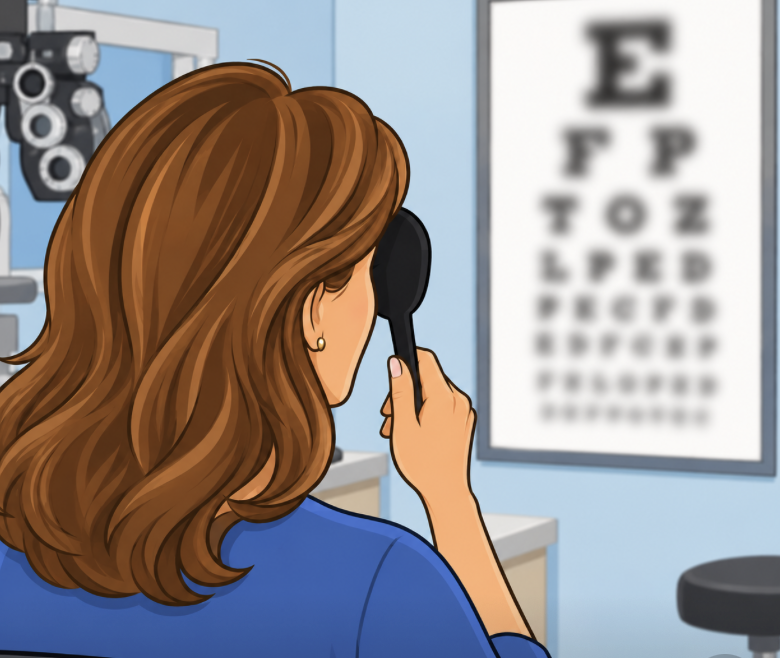
Blurry vision is a common complaint, but not all vision problems have the same cause. For people living with multiple sclerosis (MS), changes in vision can be particularly concerning. Is it an MS relapse, a simple need for glasses, or something more serious, such as a stroke? Understanding the differences can help you recognize when to seek medical attention.
Optic neuritis occurs when inflammation damages the optic nerve, which carries visual information from the eye to the brain. It is a common visual manifestation of MS and can sometimes be the first symptom of the disease.
Typical symptoms include:
- Blurred or dimmed vision, usually in one eye
- Pain behind the eye, especially when moving it
- Colors appearing faded or washed out, particularly red
- A dark or blurry spot in the center of vision
- Vision worsening over hours to several days
Unlike ordinary blurry vision, optic neuritis generally cannot be corrected with glasses. Vision often begins improving within several weeks, although recovery may take months.
Nearsightedness (myopia) and farsightedness (hyperopia) are refractive errors. They occur when the eye does not focus light properly onto the retina. Nearsightedness makes distant objects blurry while nearby objects remain relatively clear. Farsightedness may cause difficulty focusing on nearby objects, particularly when reading.
These conditions generally develop gradually, do not cause pain with eye movement or faded colors, and improve with properly prescribed glasses or contact lenses. Age-related difficulty focusing up close, called presbyopia, is another common cause of blurry reading vision, particularly after age 40.
A stroke can affect the parts of the brain responsible for processing vision. Unlike optic neuritis, which usually develops over hours or days, stroke-related visual changes typically occur suddenly, within seconds or minutes.
Warning signs include:
- Sudden loss of vision in one or both eyes
- Missing the same side of the visual field in both eyes
- Sudden double vision
- Vision changes accompanied by dizziness, imbalance, weakness, numbness, or difficulty speaking
Importantly, a stroke affecting vision may occur without weakness or speech problems. Sudden painless vision loss can also result from a retinal vascular blockage, another medical emergency.
Call 911 immediately for sudden vision loss or a new visual field defect, even if symptoms improve.
Not every visual change in someone with MS is caused by MS. Gradually worsening distance or reading vision may simply require glasses. Painful vision loss developing over days raises concern for optic neuritis and warrants prompt medical evaluation.
Sudden vision loss should always be treated as an emergency until a stroke or another vascular cause has been ruled out.
Recognizing these differences can help protect your vision and ensure you receive the right treatment at the right time. The BeCare MS App can help not only by monitoring your overall neurologic function, but also by offering two activities that can assess your visual acuity and suggest if optic neuritis is occurring. Be aware with BeCare. Become a driver in your own MS journey.