
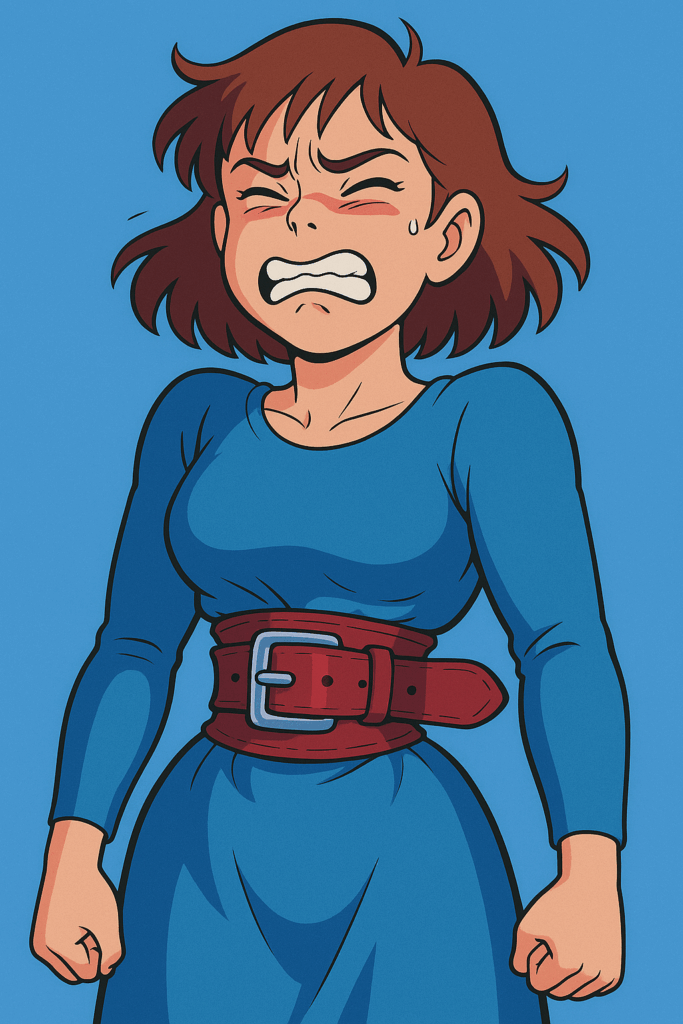
Multiple sclerosis (MS) is an immune disorder in which the coating of nerve cells of the Central Nervous System (the brain and spinal cord) are repeatedly attacked. The result is recurrent bouts of neurologic dysfunction resulting from slowed nerve transmission of messages. Because the central nervous system controls so much of the body’s functions (vision, balance, motor strength, sensation, cognition, etc…), these attacks (called MS flares) can take many forms and often mimic non-neurologic health issues.
One symptom that should raise suspicion of MS activity in the spinal cord is called the MS Hug. The MS Hug is described by many patients like the sensation of a tightening belt around the torso. The region of the torso where this band-like sensation is experienced can give clues to your neurologist what level of the spinal cord has the lesion. The tightness can be experienced anywhere between the neck and the waist and can be felt on just one or both sides of your torso. Sometimes the severity is mild. Sometimes it is so severe that it feels like breathing is restricted. Sometimes it feels like you are having a heart attack. The pain component is due to nerve damage and the tightness to muscle spasms. As with many MS symptoms, the MS Hug is often worse with stress, fatigue, when sick with an unrelated illness or in very hot or cold temperatures.
Some of the non-MS causes of a similar symptom can be due tocostochondritis which is an inflammation of the cartilage between the ribs , often caused by exertion, infection or focal injury (like after a car accident) or can be due to another source of spinal cord injury, such as spinal cord tumors and syrinx (rips) in the spinal cord.
Because patients with MS can have the same non-MS ailments as the general public, it is extremely important that you and your doctor do not attribute all of your discomforts and complaints to MS. Sometimes your doctor will have to order additional tests to “rule out” other conditions because missing a different diagnosis may lead to serious consequences. You can help your doctor by preparing ahead for her questions ,such as when did it start, is it constant or does it come and go, what makes your symptoms worse and are you having other symptoms (like new leg weakness) over the same time-period. You need to advocate for yourself to make sure that your symptoms are “heard” and are appropriately addressed.
The MS hug can be associated with weakness, numbness or bowel/bladder difficulties due to damage in the spinal cord. BeCare MS can help by quantifying your neurologic exam to give strong evidence of and direction of where to look for the source of your symptoms. Be empowered-be a decision maker in your disease journey.