
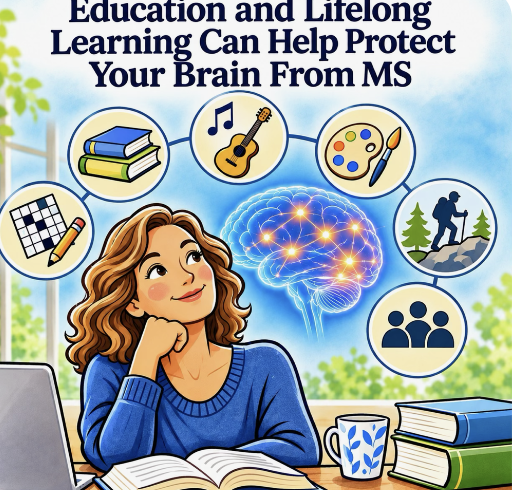
Can going to school help protect your brain from multiple sclerosis (MS)? Research suggests that people with more years of education sometimes experience better cognitive functioning and slower disability progression. But the story is more complicated—and more encouraging—than simply counting diplomas.
What Is Cognitive Reserve?
MS can damage the brain and spinal cord, sometimes affecting memory, attention, processing speed, and physical abilities. Yet two people with similar findings on brain scans may function very differently. One possible explanation is “cognitive reserve”: the brain’s ability to adapt and continue working effectively despite injury.
Education, mentally challenging work, reading, and other stimulating activities may help build this reserve. Studies suggest that people with greater cognitive reserve can perform better on thinking and memory tests, even when MS-related brain changes are present. This does not mean education prevents lesions or stops nerve damage. It may help the brain cope with damage that has already occurred.
Does Education Slow Physical Disability?
Some studies have linked higher education levels with less physical disability or a slower increase in disability over time. However, researchers cannot yet say that education itself causes MS to progress more slowly.
People with more education may also have better access to medical care, earlier treatment, more opportunities for exercise, or other resources that affect health. These factors can influence outcomes. Importantly, there is not strong evidence that earning a degree directly reduces MS inflammation, new MRI lesions, or progression independent of relapses.
The Good News: Learning Does Not End at Graduation
You do not need a college degree to keep your brain engaged. Cognitive enrichment can happen at any age and in many ways. Try learning a language, taking a class, playing an instrument, reading regularly, doing puzzles, volunteering, or exploring a new hobby. Choose activities you enjoy and that challenge you without causing excessive fatigue.
Social interaction may also provide mental stimulation. Joining a book club, participating in community activities, or spending time discussing ideas with friends and family can make learning more rewarding.
What Matters Most for MS Brain Health?
Lifelong learning is one useful piece of a larger plan. Staying physically active within your abilities, getting adequate sleep, avoiding smoking, managing blood pressure and other health conditions, and treating depression can support overall brain health. Just as importantly, work with your MS clinician to choose and stay on an appropriate disease-modifying therapy. These treatments—not educational activities—have evidence for reducing inflammatory MS disease activity.
BeCare MS can help
The BeCare MS app can help by tracking your cognitive function and your physical disability. You can follow your own scores right on the app to see what new steps or treatments you are starting are making a difference. Be Aware with BeCare. Become a driver in your own MS journey.