
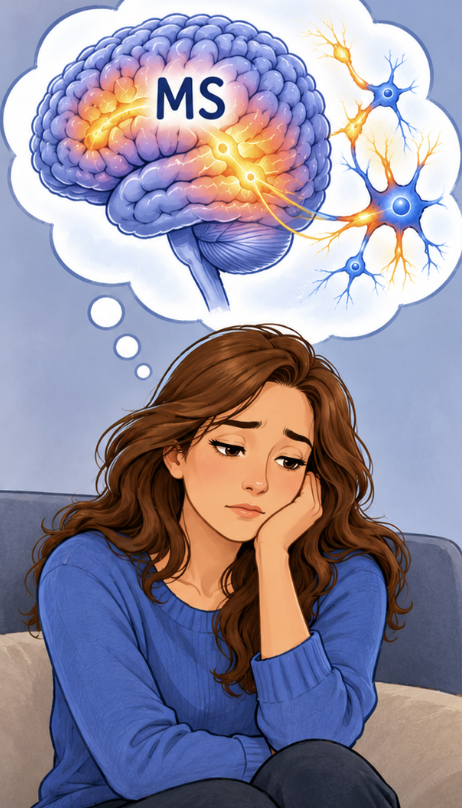
𝗗𝗲𝗽𝗿𝗲𝘀𝘀𝗶𝗼𝗻 𝗮𝗻𝗱 𝗠𝘂𝗹𝘁𝗶𝗽𝗹𝗲 𝗦𝗰𝗹𝗲𝗿𝗼𝘀𝗶𝘀: 𝗜𝘀 𝗜𝘁 𝗖𝗮𝘂𝘀𝗲𝗱 𝗯𝘆 𝗠𝗦 𝗼𝗿 𝗯𝘆 𝗟𝗶𝘃𝗶𝗻𝗴 𝗪𝗶𝘁𝗵 𝗠𝗦?
Depression is one of the most common—and often overlooked—symptoms experienced by people with multiple sclerosis (MS). Up to half of individuals with MS will experience depression during their lifetime. But an important question is often overlooked: Is depression an emotional reaction to living with MS, or is it directly caused by the disease itself?
The answer is not always straightforward. Both mechanisms can contribute, sometimes simultaneously. Understanding the differences can help patients recognize symptoms and seek appropriate treatment.
Receiving an MS diagnosis can be life-changing. Uncertainty about the future, unpredictable symptoms, physical limitations, and concerns about employment, relationships, and independence can create significant emotional stress.
Depression related to these challenges may develop following a diagnosis, relapse, or major lifestyle change.
- Sadness associated with specific MS-related challenges.
- Feelings of grief over lost abilities or independence.
- Worsening mood following a relapse or functional decline.
- Emotional improvement when circumstances become more manageable.
However, depression that begins during a stressful period is not necessarily caused solely by that stress.
MS is an inflammatory disease affecting the central nervous system. Damage to brain regions involved in emotional regulation, including connections between the frontal lobes and limbic system, may contribute to depression.
Inflammation and changes in neurotransmitter signaling may also influence mood. Unlike depression primarily associated with difficult life circumstances, biologically mediated depression may appear even when someone feels they are coping well with their diagnosis.
- Depression developing without an obvious emotional trigger.
- Persistent loss of pleasure despite positive life circumstances.
- Mood changes occurring alongside new neurological symptoms.
- Depression appearing during periods of inflammatory disease activity.
Importantly, none of these findings proves that MS-related brain changes are responsible. MRI findings alone generally cannot distinguish the two causes.
Depression in MS patients could be related to something else entirely.Several MS symptoms overlap with depression, including fatigue, difficulty concentrating, sleep disturbances, and reduced motivation. Medication side effects, chronic pain, thyroid disease, and sleep disorders may also contribute.
Consequently, fatigue or cognitive slowing alone should not be mistaken for depression. Persistent sadness, hopelessness, and loss of interest in previously enjoyable activities are particularly important symptoms to recognize.
Fortunately, both forms of MS-related depression are treatable, and treatment often overlaps. Antidepressant medications, cognitive behavioral therapy, exercise adapted to physical abilities, and improved sleep can all help. Addressing pain, fatigue, and social isolation is equally important.
If depression accompanies new neurological symptoms, patients should contact their neurologist to determine whether additional MS evaluation is warranted.
For many people with MS, depression reflects a combination of biological changes and the emotional challenges of chronic illness. Rather than focusing exclusively on identifying one cause, patients should recognize that depression is neither a personal weakness nor an inevitable consequence of MS.
Discussing mood changes openly with a neurologist or mental health professional is the first step toward effective treatment and a better quality of life.
The BeCare MS App can help both with standardized evaluation for mental health disorders, including depression, and by monitoring your neurological status to determine if your MS is progressing. Be aware with BeCare. Become a driver in your own healthcare journey.