
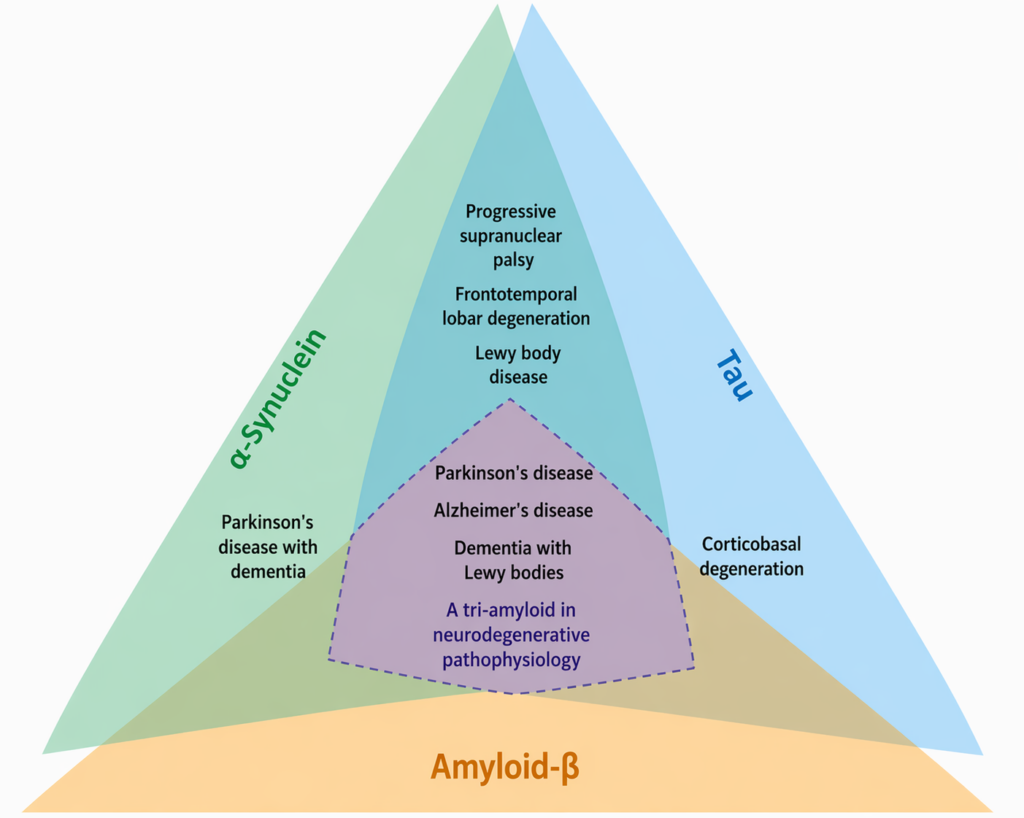
When people hear about conditions like Alzheimer’s disease or Parkinson’s disease, they often come across terms like amyloid, tau, and synuclein. These can sound confusing, but they are simply different types of proteins in the brain.
When these proteins behave abnormally, they can damage brain cells and lead to neurodegenerative diseases.
Understanding the differences between these proteins can help make sense of how these conditions develop.
In certain diseases, tau becomes abnormal and forms twisted strands inside brain cells, known as neurofibrillary tangles. These tangles disrupt the cell’s internal system, eventually leading to cell death.
Tau is strongly linked to the symptoms of Alzheimer’s disease. In fact, the amount and spread of tau in the brain tend to correlate more closely with memory loss and cognitive decline than amyloid does.
These plaques are a hallmark of Alzheimer’s disease. They are thought to interfere with communication between brain cells and may trigger inflammation, which further damages the brain.
Tau: The “Tangle” Protein
Tau is another protein that normally helps stabilize the internal structure of brain cells, especially the long fibers that transport nutrients and signals.
Amyloid: The “Plaque” Protein
Amyloid refers to a protein fragment called beta-amyloid. In a healthy brain, this protein is produced and cleared away normally. However, in some people, beta-amyloid builds up and clumps together outside of brain cells, forming what are called plaques.
Amyloid buildup often begins many years-sometimes decades-before symptoms like memory loss appear.
Because of this, amyloid is considered an early event in Alzheimer’s disease. However, it’s important to know that some people can have amyloid in their brains and never develop symptoms, which means amyloid alone does not tell the whole story.
These clumps interfere with normal brain cell function, especially in regions responsible for movement, thinking, and behavior. This is why synuclein-related diseases often cause symptoms such as tremor, stiffness, slowed movement, visual hallucinations, and fluctuations in attention.
Unlike amyloid, which accumulates outside cells, synuclein builds up inside them-similar to tau, but affecting different brain systems.
Tau is also the main problem in a group of disorders called tauopathies, which include conditions like frontotemporal dementia and progressive supranuclear palsy. In these diseases, tau-not amyloid-is the primary driver of damage.
Summary of The Difference Between Amyloid, Tau, and Synuclien in the Brain
Synuclein: The “Movement and Behavior” Protein
Alpha-synuclein is a protein found in nerve cells, particularly in areas of the brain that control movement and coordination.
In diseases like Parkinson’s disease and Lewy body dementia, this protein misfolds and clumps together inside brain cells, forming structures called Lewy bodies.
- Memory loss is more prominent in Alzheimer’s disease, where amyloid and tau are involved
- Movement problems are more common in Parkinson’s disease, where synuclein plays a key role
- Some conditions, like Lewy body dementia, can overlap, involving both cognitive and movement symptoms.
Associated Condition
Location
- Amyloid builds up outside brain cells
- Tau and synuclein accumulate inside brain cells
- What does that mean for the patient?
Neurodegenerative disorders do not always fit neatly into one category or another. Making the diagnosis is very important because there are new advances available to patients on a regular basis. By taking advantage of new therapeutics, patients can improve their quality of life and sometimes even longevity.
BeCare Neuro and BeCare Parkinson’s can help identifying abnormalities on your neurologic examination, which can prompt you to seek evaluation by the appropriate specialist and can direct your specialist to order the correct Bio markers.
Be aware with BeCare. Become empowered. Be a driver in your own healthcare journey.