
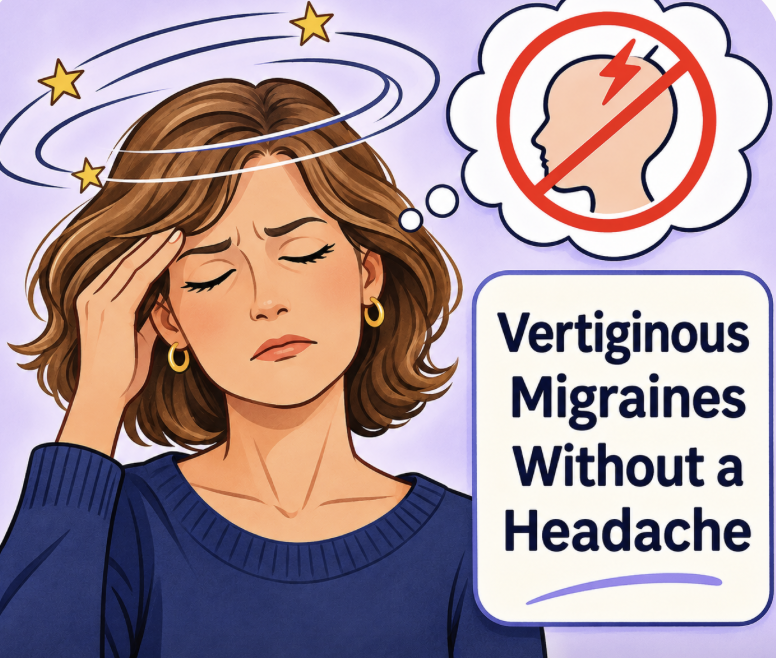
Can you have a migraine without a headache? Absolutely. For some people, migraines cause dizziness, vertigo, and balance problems rather than the throbbing head pain most people associate with migraine. This condition, called vestibular migraine, is one of the most common causes of recurrent vertigo.
Vestibular migraine is a neurological condition that affects the brain’s processing of balance and motion. The vestibular system helps us maintain balance and understand where our body is in space. During a vestibular migraine, changes in brain activity can disrupt these processes, creating sensations of spinning, rocking, or unsteadiness.
A headache does not have to occur during an episode. Some people have a history of traditional migraines but later develop episodes of vertigo without any head pain.
Symptoms vary considerably from person to person and may include:
- Vertigo: A spinning sensation, even when sitting or lying still.
- Dizziness: Feeling lightheaded, off-balance, or as though the ground is moving.
- Motion sensitivity: Discomfort when riding in a car, turning the head, or watching moving objects.
- Nausea: Sometimes accompanied by vomiting.
- Visual sensitivity: Difficulty tolerating bright lights, busy patterns, or scrolling screens.
- Sound sensitivity: Ordinary noises may seem unusually bothersome.
Episodes typically last anywhere from five minutes to 72 hours, although some lingering imbalance may persist longer.
Many triggers are similar to those associated with traditional migraines. Common examples include stress, inadequate sleep, dehydration, skipped meals, hormonal fluctuations, and certain foods or alcohol. Weather changes, bright lights, and prolonged screen exposure may also provoke symptoms in susceptible individuals. Not everyone has identifiable triggers.
There is no single blood test or brain scan that confirms vestibular migraine. Diagnosis is based on the pattern of symptoms, migraine history, and examination. A neurologist may recommend hearing tests, vestibular testing, or an MRI when appropriate to exclude other causes.
Conditions such as benign paroxysmal positional vertigo (BPPV), Ménière’s disease, and inner ear disorders can produce similar symptoms. Sudden dizziness accompanied by double vision, difficulty speaking, weakness, or inability to walk requires emergency evaluation because these can be signs of a stroke.
Treatment of a vestibular migraine is similar to that of classic migraines with or without aura. Vestibular rehabilitation therapy can improve balance and motion tolerance, particularly when dizziness persists between episodes.
The BeCare Headache app can help you to track your headaches and your vestibular migraines that do not have headaches without headache tracker. Our headache classification based on the ICHD-3 categorization used by all headache specialists, enhanced by BeCare’s AI can help direct you and your doctor to the correct diagnosis and treatment. Join our headache community, sharing and supporting each other and pose your questions to our AI assistant. Be aware with BeCare. Become a driver in your own headache journey.