
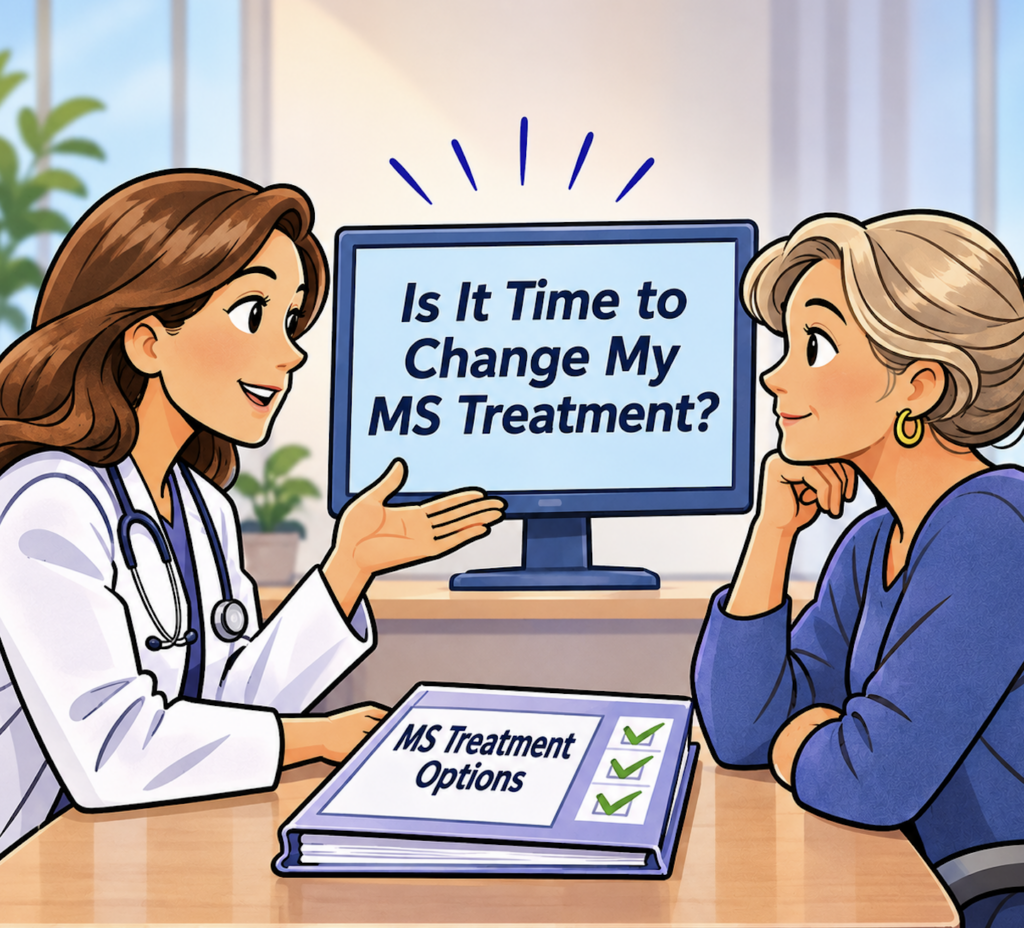
If you have multiple sclerosis (MS), one of the most important decisions you and your neurologist will make is whether to continue your current treatment or switch to another. With more than 20 disease-modifying therapies (DMTs) available, there are many options for managing MS. But how do you know when it’s time for a change?
The goal of MS treatment is to prevent relapses, reduce new MRI lesions, and slow disability progression while minimizing side effects. Here are five important reasons your neurologist may recommend switching medications:
- New clinical relapses
- New lesions on MRI
- Progressive disability
- Significant side effects to the medication
- Life circumstances have changed
A relapse occurs when new neurological symptoms appear, or previous symptoms worsen, for at least 24 hours without another explanation, such as infection or fever.
If you experience a relapse while taking medication, it may indicate that your treatment is not adequately controlling the disease. Even one significant relapse can prompt your neurologist to consider a more effective therapy.
You may feel perfectly well while MS continues to cause inflammation in your brain or spinal cord. New or enlarging MRI lesions can indicate ongoing disease activity, even without noticeable symptoms. Your neurologist will compare your scans over time to determine whether your medication is working.
Sometimes MS symptoms gradually worsen without obvious relapses or new MRI lesions. You might notice increasing difficulty walking, reduced hand coordination, or worsening balance. This can represent progression independent of relapse activity (PIRA), which may occur even when inflammatory disease activity appears controlled.
Even an effective medication may not be the right choice if it causes intolerable side effects or serious safety concerns. Frequent infections, abnormal laboratory results, liver problems, or troublesome reactions may justify changing therapies.
Pregnancy planning, advancing age, other medical conditions, or increased infection risk may influence which MS therapy is most appropriate.
Your neurologist may recommend switching even when your MS is otherwise stable.
At your next appointment, consider asking:
- Is my MS currently well controlled?
- Have there been any changes on my MRI?
- Would another treatment offer better protection?
- Do the benefits of my medication still outweigh its risks?
The BeCare MS App can help by tracking your neurologic function, disability and symptoms, helping you and your doctor make treatment decisions. Be Aware with BeCare. Become a driver in your own neurologic journey.