
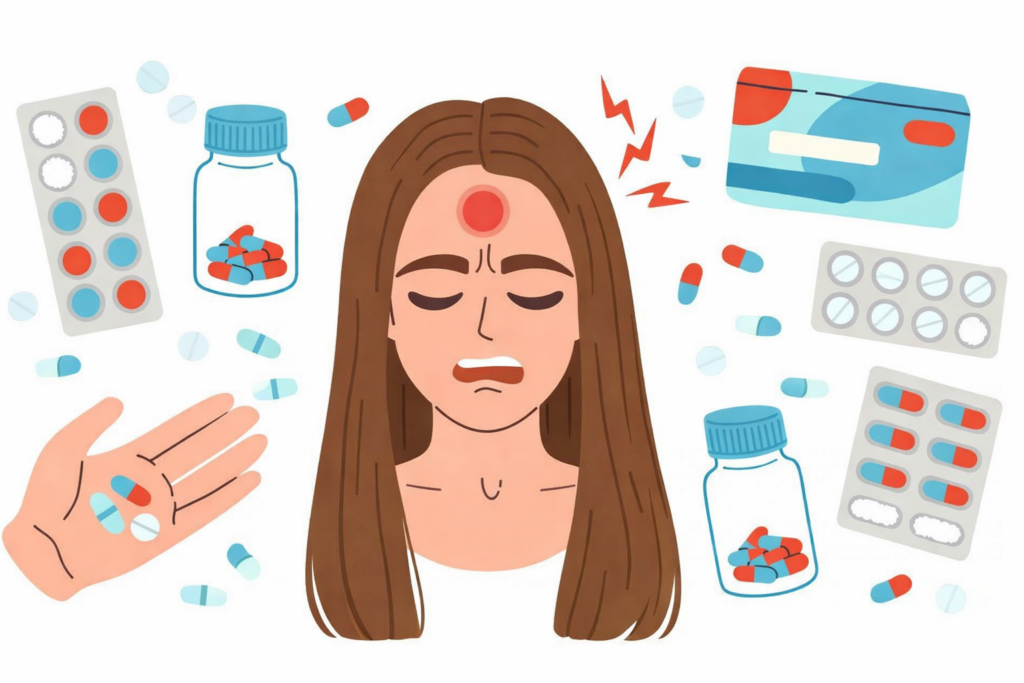
Women have suffered from migraines is silence for millennia. The first description of migraine headaches was in 1550 BC by the Egyptians and in writings by Hippocrates in 400 BC. The first acute therapy for migraines was released around 1940 when ergotamine was first introduced for acute migraine therapy. Very little progress was made until the release of the first triptan (Imitrex or sumatriptan) in 1990. Since that time there has been tremendous growth both in the arsenal of abortive medications available and the subspecialty training of headache specialists.
After Imitrex was introduced, the development of various other triptans and various routes of administration developed have exploded the field. The biggest advance after triptans was the discovery that a protein called calcitonin gene-related peptide (CGRP) was instrumental in the development of migraines and associated symptoms. Since that discovery a number of classes of medications targeting CGRP have made headache-free or nearly headache-free existence a real possibility for those who suffered most.
The classes of drugs targeting CGRP include Botulinum toxin injections (Botox), the gepants, and the ditans (like Reyvow). All of these medications have safer and more effective profiles than the triptans and can be used concurrently. One of the gepants (Nurtec) can be used for both prevention and acute relief. Further, gepants used for acute relief can be combined with CGRP-targeting preventive therapies, such as Botox, monoclonal antibodies (such as Aimovig and Emgality), and CGRP receptor antagonists (blocking CGRP receptors) which include the gepants Qulipta, and Nurtec. These medications which block the CGRP pathway, reduce migraine frequency by targeting the peptide or its receptor.
The bottom line is that no one should lose days to migraines any longer. There are too many effective and safe options available. Discuss your options with your clinician. BeCare Headache can help by giving you a presumptive diagnosis, by helping you track your headache frequency, disability and triggers, by offering its AI assistant who can help you navigate the options to bring to your next doctor’s appointment, and by getting support and advice from the BeCare Headache community chat.
Be empowered. Become a driver in your own migraine journey.