
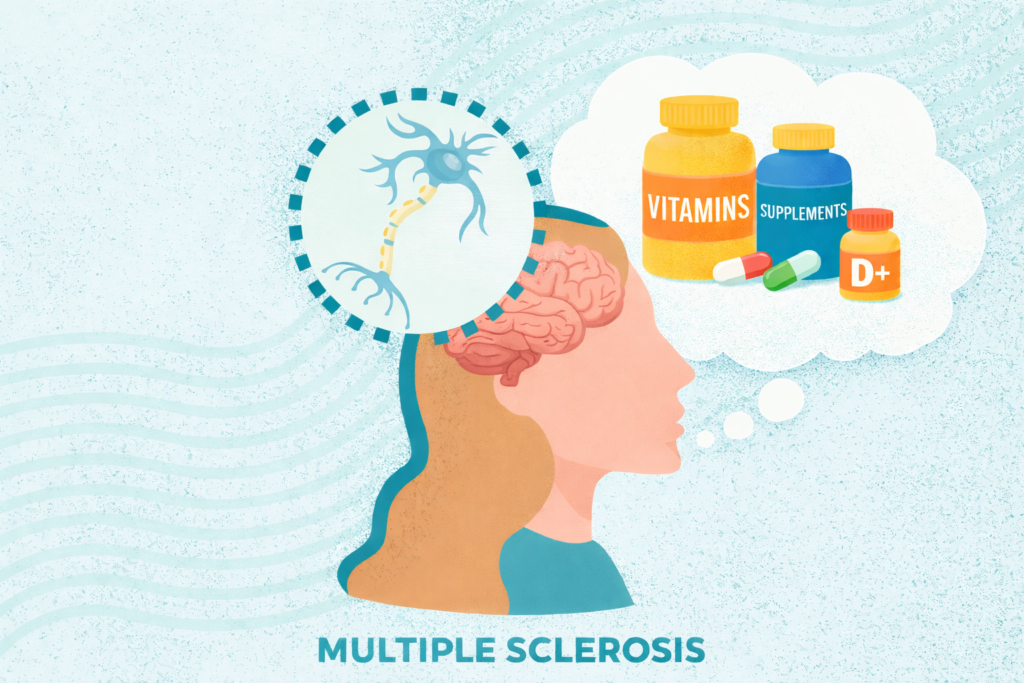
People with multiple sclerosis (MS) are among the most empowered and engaged when it comes to taking control of their disease and disease symptoms. The average age of MS sufferers is a bit younger than that of other neurologic disorders (30 years old vs 60 years for all neurologic conditions). This means MS patients tend to research more about their options, adopt a healthy lifestyle, and take vitamins and supplements in addition to prescription treatments.
The problem is that some vitamins and supplements may not work or may cause adverse health effects, especially when taken at higher than recommended doses. Pharmaceutical companies spend a fortune to prove that their drugs are both effective and safe before they even apply for FDA clearance. All prescribed treatments must be FDA approved. Not so for vitamins and supplements, some of which claim to slow MS progression and reduce relapses.
So, what’s the big deal? Sometimes a patient may believe there is benefit because of a placebo effect, meaning they sense an improvement because they want to see an improvement even if it isn’t real. Next, not only does the FDA not clear these substances, it also doesn’t regulate them. That means that potentially dangerous contaminants are undetected and the amount of the vitamin or supplement may vary significantly between manufacturers and even between batches. Further there is no monitoring for undetected adverse health risks. The biggest risk is that people who are determined to stay “natural” in their treatment may use vitamins and supplements in lieu of proven effective therapies. Finally, vitamins and supplements can be very expensive
On the other hand, there most certainly is a role for some vitamin and supplementation in adjunctive treatment of MS. For example, Vitamin D deficiency is associated with a higher risk of developing MS. Vitamins A, E, and C are antioxidant vitamins the protect the body against stress but studies have not reliably shown a role in MS treatment. Some studies have suggested a link with B12 deficiency as well but overall most believe there is no link, though the symptoms of B12 deficiency, such as fatigue and gait imbalance, can mimic MS symptoms. Omega-3 fatty acids, B12, Vitamin A, biotin, carnitine, coenzyme Q10, melatonin and probiotics may reduce inflammation, helping to repair the myelin (covering nerves in the brain) that is stripped during a flare, and possibly slowing disability progression through anti-inflammatory and immune-modulating effect. These vitamins and supplements may improve fatigue, sleep and cognition, but again more study is needed. The best studied in MS other than Vitamin D are B12 and Omega-3 but the conclusions are mixed. Some MS patients take ginseng, cranberry, echinacea, ginkgo biloba, valerian, and Saint-Johns’s wort even though there’s little evidence for benefit or safety.
So what should you do? Get blood measurements for vitamin deficiencies (especially Vitamin D,A, and B12). If you choose to start supplements, do some research to see if they interact with any of the prescription medications, vitamins and supplements you are taking for any other medical conditions. Check out the brands to make sure they are reputable. While the FDA does not test them, there are third party companies that do and seeing their name on the bottle can give you some comfort (ConsumerLab.com, NSF International, UL, and U.S. Phamacopeia). Go see a nutritionist to see if you can bolster your vitamin levels by adjusting your diet.
BeCare MS can help. Monitor your neurologic health and symptoms, ask other patients in our MS community for their experience, and use our AI assistant specializing in MS for your research. Be empowered. Become a driver in your MS journey.