
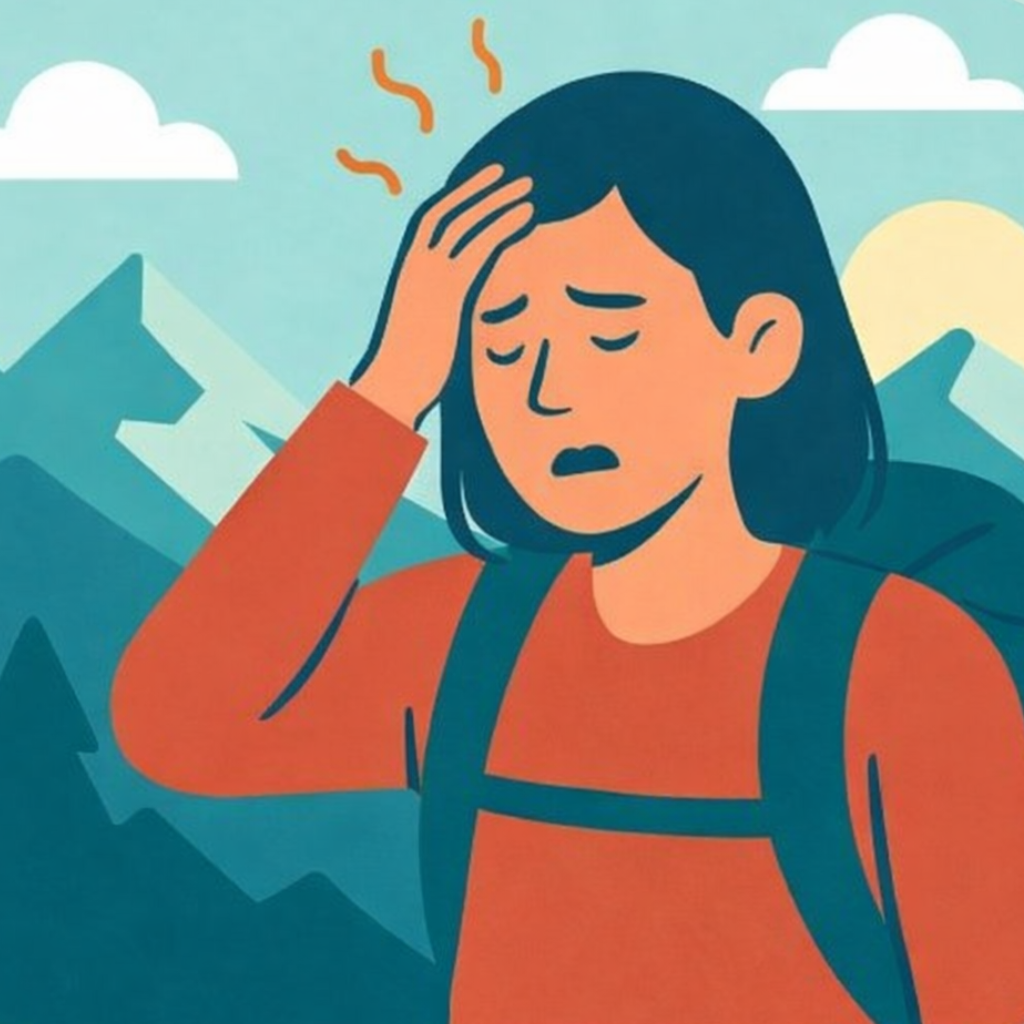
Planning for that bucket-list trip to the Galapagos, Machu Pichu or for that yearly ski trip to Utah? You need to be aware of the possibility of getting headaches from high altitudes both during and after the trip, especially if you are a migraine sufferer. The more you know, the better you can prepare.
Altitude headaches typically occur when travelling to elevations above 8200 feet and are characterized as a dull, throbbing, or pounding pain. These symptoms often worsen with exertion, coughing, or bending over. The symptoms occur within the first 24 hours of ascent and usually resolve within 1-2 days at high altitude as your body acclimates to the height. The cause is a combination of low oxygen (hypoxia) and low barometric pressure. Head pain may be accompanied by nausea, vomiting, dizziness, fatigue, and difficulty sleeping.
You can take steps to prevent high altitude sickness by making the ascent more gradually, adjusting your travel schedule by allowing 2-3 days for acclimatization, staying very hydrated, and avoiding alcohol and smoking.
Before you travel you can ask your doctor for a prescription for acetazolamide that you would take for 24-48 hours before your trip (usually 125 mg twice a day) and for the first few days once you have ascended. If you still develop symptoms, you can use ibuprofen or acetaminophen and, if severe, steroids (Decadron that you would ask your doctor to prescribe for you to bring just in case).
While altitude sickness is extremely common, it may be of concern and warrant immediate medical attention if you also develop confusion, lack of coordination or are not improving. These symptoms may indicate either: 1. High-altitude cerebral edema (HACE), which is a life-threatening form of altitude sickness caused by brain swelling due to a lack of oxygen (generally over 13,000 feet), which can lead to death or coma if not treated with immediate descent or 2. High-altitude pulmonary edema (HAPE) is caused by fluid leaking into the lungs with associated shortness of breath, rapid heart rate, and coughing with pink/frothy sputum.
Most but not all headaches at high altitude are part of Acute Mountain Sickness (AMS). When headaches are the primary symptom above 8500 feet, you may be suffering from Altitude Headaches alone. These are caused by dehydration, sun exposure, caffeine withdrawal, and a history of migraines. These headaches are triggered by the low oxygen alone.
So, you finally get home and off the plane and think you will feel better right away. Not always true. There is a condition called Reverse high-to low altitude sickness (also known as High-Altitude De-Acclimatization Syndrome), which happens when people return to lower altitudes. Symptoms include severe fatigue, headache, reduced appetite, and chest tightness, which can last for days. They are a result of the body re-adjusting to higher oxygen levels and the time taken to reverse the physiological changes that occurred at high altitude. This syndrome usually resolves on its own after 1-3 days, especially with adequate rest and hydration.
If you think you are immune to this because you are generally physically fit, you are wrong. People at the highest risk are those with a history of prior migraines. The risk is similar across genders, though it is slightly higher in adults over 50.
BeCare Headache App can help by tracking your headache frequency, severity, and associated symptoms, through BeCare’s AI assistant who can answer more detailed questions, and through our engaged community with shared experiences. Be empowered. Become a driver in your own headache journey. Become aware with BeCare.