
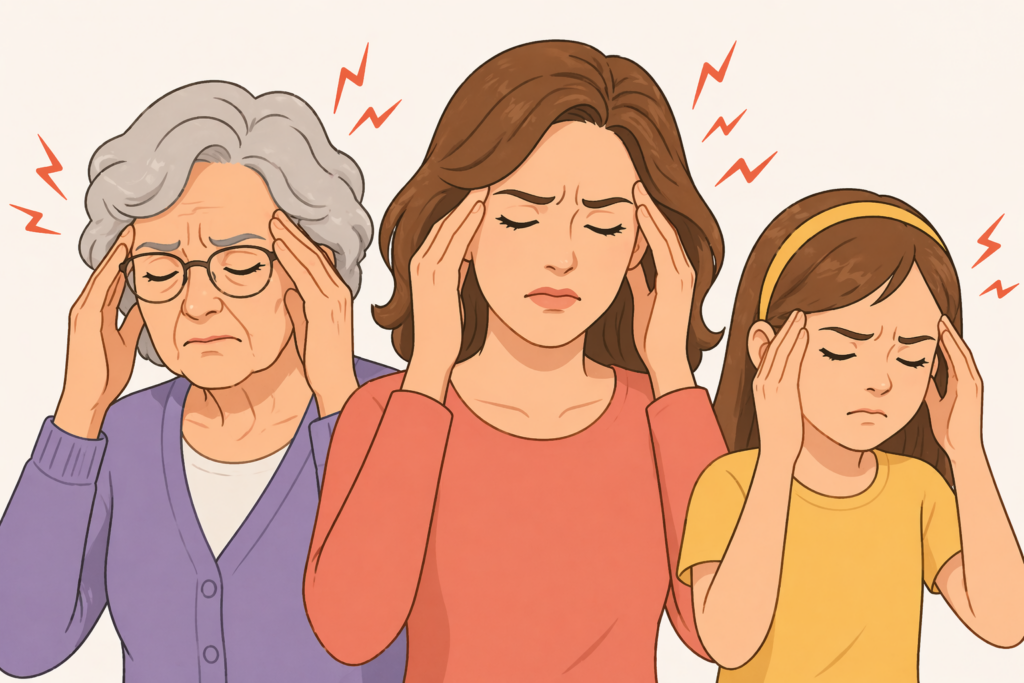
If you’ve ever heard someone say, “Migraines run in my family,” they’re not imagining it. Migraines aren’t just bad headaches—they’re a complex neurological condition, and genetics plays a meaningful role in who gets them and how severe they can be. But the story isn’t as simple as inheriting a single “migraine gene.” Let’s break it down in a way that actually makes sense.
Migraines are common—and often inherited.
Migraines affect about 1 in 7 people worldwide. If one of your parents has migraines, your chances of developing them are significantly higher. If both parents have migraines, the likelihood increases even more.
This pattern strongly suggests a genetic component. But unlike conditions caused by a single gene (like cystic fibrosis), migraines are usually influenced by many genes working together, along with environmental triggers like stress, sleep, diet, and hormones.
What does “genetic” really mean here?
When we say migraines are genetic, we mean that certain inherited traits can make your brain more sensitive to migraine triggers.
One way to think of it is that some people people are born with a nervous system that’s more sensitive to their environment. Their brain cells communicate differently, making them more prone to the chain reaction that leads to a migraine.
This includes increased sensitivity to light, sound, and smell; changes in how pain signals are processed; altered blood flow in the brain; and differences in brain chemicals like serotonin.
So the key take home is that you don’t inherit migraines, you inherit a lower threshold to get them.
One exception to this is a rare condition called “familial hemiplegic migraine” or FHM.. It is caused by specific gene mutations-several genes linked to FHM affect how calcium and sodium move in and out of brain cells. People with this condition can experience temporary weakness on one side of the body during a migraine attack.
Genetics also influences how your brain uses certain chemicals, especially serotonin, which plays a key role in pain and mood. In people prone to migraines, serotonin levels can fluctuate in ways that make blood vessels in the brain constrict and then expand, increase sensitivity to pain, and trigger inflammation around nerves. Your genetic makeup helps determine how stable these systems are.
Triggers differ from person to person. One person may gets a migraine from red wine, while another gets migraine from bright lights or lack of sleep?
That’s where genetics and environment interact.
Your genes shape how your body responds to hormonal changes, sleep patterns, dietary components, and stress levels.
This is why migraine triggers are so personal—and why keeping a migraine diary can be helpful.
Can genetic testing help? The answer is almost no, unless your doctor has reason to suspect FHM. There’s no single gene to test for in typical migraines; having migraine-related genes doesn’t guarantee you’ll have migraines, and treatment decisions are based on symptoms, not genetic results.
Understanding that migraines have a genetic basis can be empowering. Often migraine sufferers just attribute headaches to stress and just try to push through it. Historically, migraines were considered a “woman’s hysteria” and not taken seriously. Fortunately, over the last 20 or so years much attention has been pain to migraine. Through extensive research we have learned the biology of migraines and from this has arisen progressively better preventive therapy. Knowing that there is a biologic reason behind your headache may make you more likely to seek treatment which can often offer a largely headache-free life. Unthinkable a couple of decades ago.
BeCare Headache App can help you track your headache pattern, trigger and response to both preventive abortive medications. Be Aware with BeCare. Be empowered and become a driver in your headache journey.